
Rapid Reports
Examining Reproductive Equity in the Post-Roe United States
The Supreme Court’s June 24, 2022 decision in Dobbs v. Jackson Women’s Health Organization overturned Roe v. Wade and eliminated the federal constitutional right to abortion that was previously recognized by the Court, returning broad authority over abortion regulation to the people and their elected representatives. The decision contributed to a highly fragmented policy landscape, with states adopting different abortion bans, restrictions, and protections, which has important implications for access to reproductive health care, especially for women, women of color, and those in underserved communities.
States with restrictive reproductive right policies are disproportionately characterized by limited maternal healthcare infrastructure and are associated with greater barriers to care for low-income women and women of color. Public opinion continues to show majority support for legal abortion, although national and state-level opinion varies and does not always align with state policy environments. It is crucial to examine state responses to the overturn of Roe, the resulting impacts on women’s health and rights, and offer recommendations for more inclusive and equity-based policymaking.
Four years after the U.S. Supreme Court overturned Roe v. Wade, state-level variation in reproductive rights policy is associated with substantial geographic inequities in access to abortion and reproductive health care across the United States. The adoption of restrictive or protective reproductive rights policies is closely tied to legislative control, underscoring the political drivers of reproductive inequity. The evidence suggests that advancing reproductive equity will require coordinated national, state, and local response to strengthen healthcare infrastructure, reduce economic barriers, and establish durable legislative protections for reproductive rights.
KEY TAKEAWAYS
State-Level reproductive policies following the reversal of Roe v. Wade are deepening national health inequities.

Restrictive policies exacerbate health and economic risks for women, especially women of color and low-income women.
The party affiliation of state legislators is closely related to whether a state adopts restrictive or protective reproductive rights policies.
Addressing these issues requires coordinated national, state, and local actions to expand provider and clinic capacity, increase financial and mental health support, address systemic disparities in access to care, and establish durable legislative protections for reproductive rights.
STATE POLICIES ON REPRODUCTIVE RIGHTS AFTER THE END OF ROE V. WADE
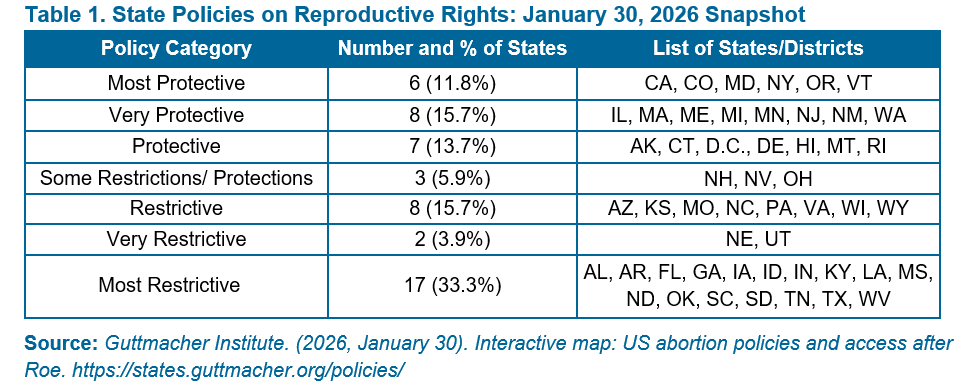
The Guttmacher Institute (2026) classifies the 50 states and the District of Columbia (D.C.) into seven abortion policy-environment categories ranging from “Most Protective” to “Most Restrictive” based on the combination of abortion restrictions and protections in effect in each jurisdiction. In January 2026, more than three years after the overturn of Roe v. Wade, as shown in Table 1, 27 of 51 (52.9%) states and D.C. have restrictive policies on reproductive rights; three states (5.9%) have some restrictions/protections, and 21 (41.2%) have protective policies on reproductive rights. Of the 27 states with restrictions on reproductive rights, 17 are considered the “Most Restrictive”; two states are “Very Restrictive”; and eight states are considered “Restrictive”. Of the 21 jurisdictions with protections on reproductive rights, six are considered the “Most Protective”, eight “Very Protective”, and seven “Protective”. Despite the fact that most states adopted restrictive policies, public opinion has increasingly favored access to legal abortion, raising important concerns about the disconnection between state legislation and the public's stance on reproductive rights.
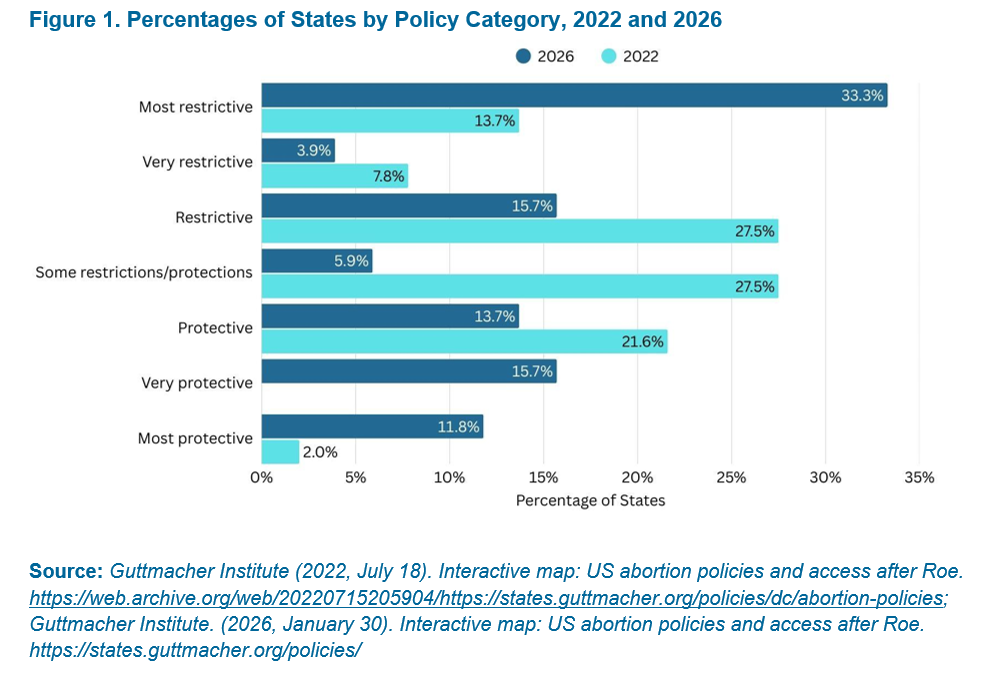
Since 2022, reproductive rights policies at the state level have become increasingly politicized. States with Republican-leaning legislatures are more likely to adopt restrictive reproductive rights policies, whereas states with Democratic-leaning legislatures tend to adopt more protective policies. As shown in Figure 1, the 2026 data show that while the total proportion of restrictive jurisdictions, including states classified as “Restrictive”, “Very Restrictive”, and “Most Restrictive”, increased modestly, from 49.0% to 52.9%, the overall distribution shifted toward more restrictive categories compared to 2022, with a large proportion of states moving from “Restrictive” or “Very Restrictive” categories to the “Most Restrictive” tier. According to Figure 1, in 2022, seven states (13.7%) were categorized as most restrictive. By 2026, that number increased to 17 states (33.3%). At the same time, the middle-ground category of “Some Restrictions/Protections” shrank from 14 states (27.5%) in 2022 to just 3 states (5.9%) in 2026.7 The decline in the “Some Restrictions/Protections” category signals increasing policy polarization, as states increasingly move away from the middle category and toward the extreme categories– either “Most Restrictive” or “Most Protective”.
Protective tiers also consolidated. In 2022, only one state (2.0%) was considered most protective, and no state was considered very protective. However, in 2026, six states (11.8%) were classified as “Most Protective”, and eight states (15.7%) as “Very Protective”. This demonstrates that the post-Dobbs v. Jackson Women's Health Organization era has produced simultaneous entrenchment on both ends of the policy spectrum.
THE PUBLIC’S STANCE ON REPRODUCTIVE RIGHTS
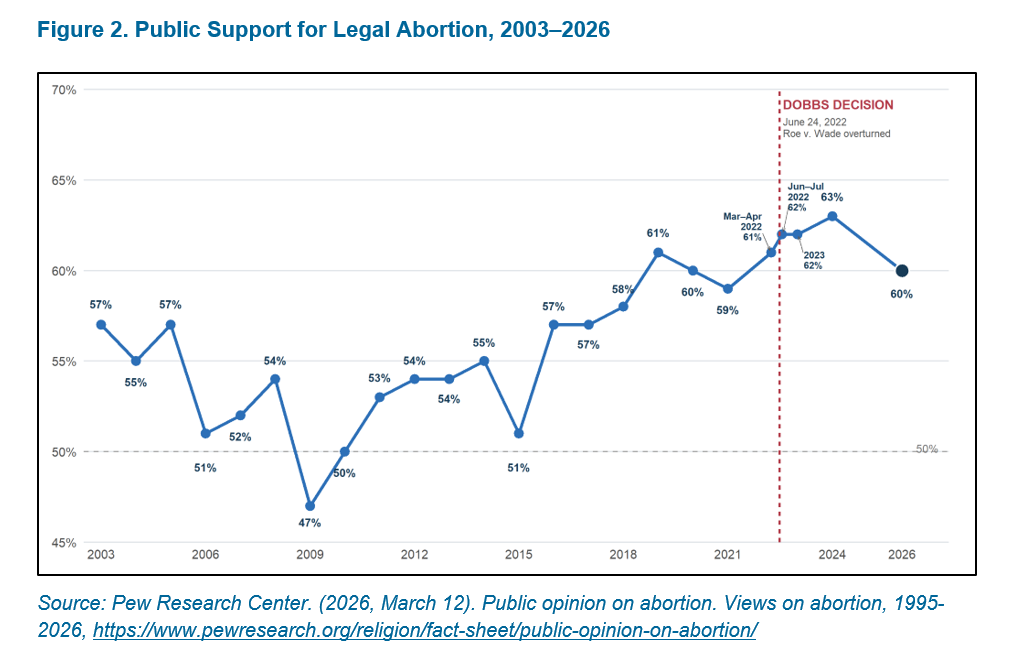
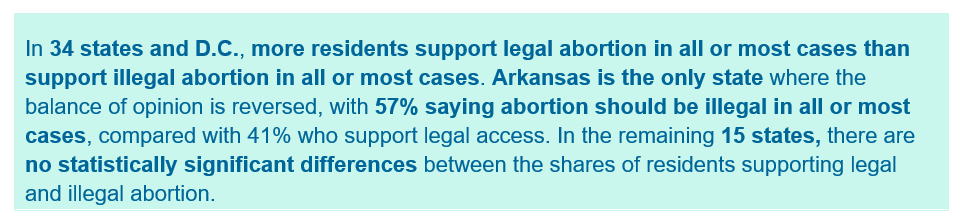
U.S. public opinion on abortion legality from 2003 to 2026 showed consistently greater support for legal abortion in all or most cases (see Figure 2 below). Support for legal abortion has remained the more prevalent position in most years, reaching or exceeding 50% in all but one year: 2009 (47% supporting legal abortion in all or most cases vs. 44% supporting illegal abortion in all or most cases). Following the U.S. Supreme Court’s decision in Dobbs v. Jackson Women’s Health Organization in June 2022, support for legal abortion increased from 59% in 2021 to 62% in June/July 2022. It remained at 62% in 2023, reached a peak of 63% in 2024, and declined slightly to 60% in 2026. In contrast, the proportion supporting illegal abortion declined from 39% in 2021 to 36% in 2022 and remained at 36% in 2023 and 2024—the lowest recorded level since 1995—before increasing slightly to 38% in 2026. The gap between those supporting and opposing legal abortion widened from 20 percentage points in 2021 to 27 percentage points in 2024, before narrowing to 22 percentage points in 2026. Overall, these trends indicate that public support for legal abortion remained strong following the overturning of Roe v. Wade. Consistently, another poll fielded a week after the leak of the Supreme Court’s opinion of Dobbs v. Jackson Women’s Health Organization also found that 74% of U.S. adults feel abortion should be “a personal [health] choice and not regulated by law.”
 POPULATIONS IMPACTED BY RESTRICTIONS ON REPRODUCTIVE RIGHTS
Reproductive rights policies directly impact women, especially women of color and low-income women, who make up a large share of the total population in many states. This section provides an overview of these populations, which are significantly affected by changing reproductive rights policies across states.
Examining the racial composition of women across the policy environment helps illustrate the demographic context in which reproductive policy is enacted. According to the 2024 American Community Survey, women accounted for 50.7% (about 172 million) of the U.S. population. Of the total 50 states, there are 39 states where women account for half or over of their total population. These data underscore the broad reach of state-level reproductive rights policies and the substantial number of women whose lives may be affected by them.
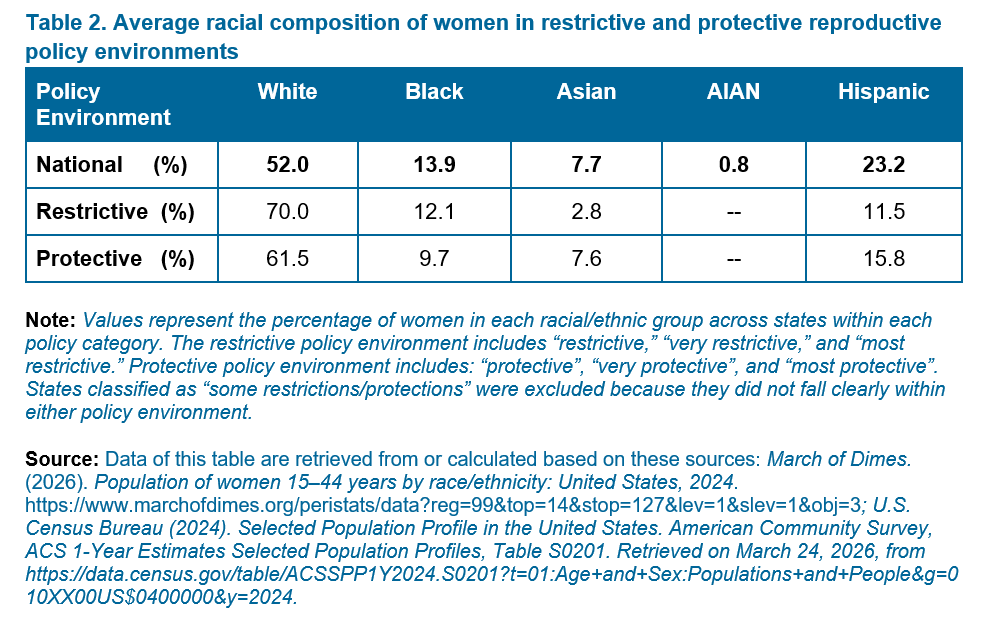
Specifically, there were about 67.4 million women of childbearing age (ages 15-44) in 2024. White women constitute the largest racial and ethnic group among women in the United States, although the racial and ethnic composition of women varies considerably across states. Nationally, non-Hispanic White women made up approximately 52.0% of this population, followed by Hispanic women (23.2%), non-Hispanic Black women (13.9%), non-Hispanic Asian/Pacific Islander women (7.7%), and non-Hispanic American Indian or Alaska Native women (0.8%). These demographic differences provide important contexts for understanding where restrictive and protective reproductive policy environments are concentrated given the devolution of reproductive policy to the state level.
As shown in Table 2 below, states with restrictive reproductive policy environments (including “Most Restrictive”, “Very Restrictive”, and “Restrictive”) have, on average, larger White women populations, whereas states with protective reproductive policy environments (including “Most Protective”, “Very Protective”, and “Protective”) had higher average proportions of Hispanic and Asian women. These differences suggest that reproductive policy is concentrated within distinct demographic contexts.
The economic status further exacerbates the inequities caused by reproductive restrictions. Although women comprise just over half of the U.S. population, they are disproportionately represented among Americans living in poverty. An estimated 11.6% of women lived below poverty in 2024, while this percentage was only 9.6% for men. Women of color are disproportionately represented among those living in poverty. For example, in the same year of 2024, an estimated 19.4% of Native women, 17.8% of Black women, 15.9% of Native Hawaiian and Pacific Islander women, and 15.2% of Latinas lived below poverty. Across states and D.C., the poverty rate among families headed by single women with children ranged from 19.7% to 43.9%. As shown in Table 3, four states/districts had poverty rates of 40%–49%, 22 states had rates of 30%–39%, 24 states had rates of 20%–29%, and one state had a rate below 20%. Most states (three out of four) with the highest poverty rates (40–49%) among families headed by single women with children had the most restrictive reproductive rights policies. Similarly, among the 22 states with poverty rates of 30%–39%, 15 had restrictive reproductive rights policies, including nine with the most restrictive policies.
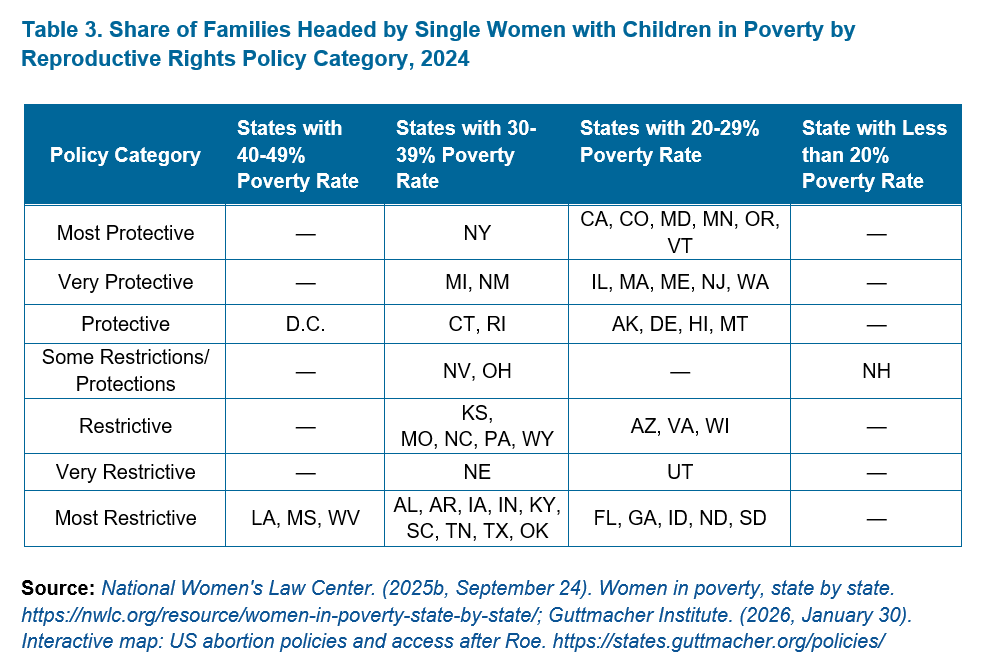
These data suggest that women of color and women living in poverty may be disproportionately affected by restrictive reproductive policy environments, as many live in states with more restrictive policies. In states with the most restrictive reproductive policies, women make up a substantial share of the population living in poverty, which may increase their vulnerability when access to reproductive healthcare is limited. This pattern raises significant equity concerns, particularly for women who already face social and economic marginalization.
EQUITY IMPACTS OF RESTRICTIONS ON REPRODUCTIVE RIGHTS ON WOMEN
Research indicates that policies that restrict reproductive rights increase vulnerability in women. The overturning of Roe v. Wade has created challenges for women with unintended pregnancies to access and utilize quality abortion services. This lack of access could contribute to heavy financial burdens, adverse health outcomes, psychological disorders, and greater health risks related to unplanned pregnancies.
Limited Access to Maternal Health Services
Notable disparities in maternity care resources exist between states with reproductive rights restrictions and those with reproductive rights protections. Data indicate that access to maternity care is significantly more limited in states with abortion bans or restrictions, as categorized by Guttmacher Institute in 2025. More than 35% of U.S. counties are classified as maternity care deserts. States where more than half of counties lack maternity care services, such as Arkansas, Mississippi, North Dakota, Oklahoma, and South Dakota, all have restrictive reproductive rights policies, demonstrating the overlap between limited reproductive healthcare access and restrictive policy environments. Additionally, over 36% of U.S. counties lack an obstetric clinician, and 1.2 million women live in counties served by only one obstetric clinician. In states with the most restrictive abortion laws, physicians may face significant legal risks when providing abortion care, including losing their medical license and criminal penalties, even in cases involving medically necessary care. These disparities in maternity care infrastructure coexist with restrictive reproductive rights policies in some states. In the 14 states with abortion bans in effect in March 2024, 63 clinics had provided abortion care in 2020; by March 2024, none of those states had clinics providing abortion services. Nationally, the number of brick-and-mortar abortion clinics declined from 807 in 2020 to 765 in March 2024, a 5% decrease. By December 2025, 753 brick-and-mortar clinics were providing abortion care nationally. Moreover, following the reversal of Roe v. Wade, the implementation and enforcement of abortion bans have contributed to increased interstate travel among people seeking abortion care in states where abortion remains legally available. These shifts have created additional burdens for people who must travel across state lines to access care, particularly those facing financial, geographic, or logistical barriers.
Health Risks
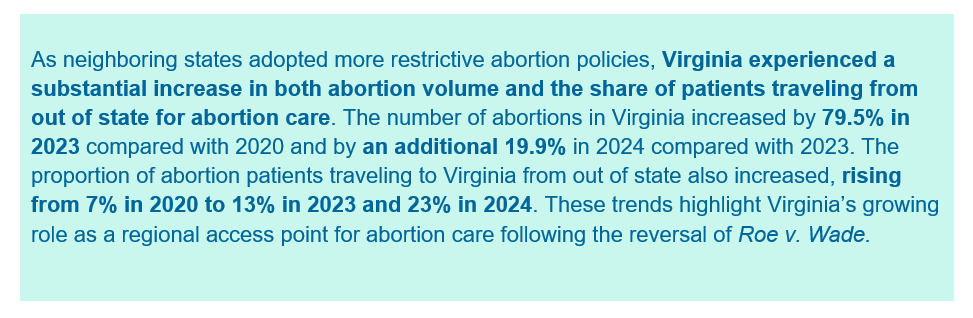
People living in restrictive policy environments may pursue several pathways, including interstate travel, clinician-provided telehealth medication abortion, self-managed abortion, or continuation of an unwanted pregnancy when preferred care is unavailable. For example, as neighboring states including Tennessee, West Virginia, and Kentucky, as well as other Southern states such as Florida, adopted more restrictive abortion policies, Virginia maintained comparatively broader protections, making it one of the few Southern states where abortion remains available through the second trimester. As a result, Virginia experienced a 79.5% increase in abortions in 2023 compared to 2020, and a 19.9% increase in 2024 compared to 2023. The share of abortions in Virginia provided to out-of-state residents rose from 7% in 2020 to 16% in 2023 and 24% in 2024; in 2025, the share was 21%, highlighting Virginia’s important regional role in abortion care. Similar patterns have emerged in states bordering those with total abortion bans, including Colorado, Illinois, and New Mexico, which have experienced substantial increases in out-of-state patients seeking abortion care. This increased demand has placed additional pressure on providers and health systems to meet the rising needs of patients traveling from states with more restrictive policies.
Increasingly restrictive reproductive rights policies have created greater barriers to abortion access, potentially increasing health risks for individuals seeking reproductive care. When access to safe and legal abortion is limited, some individuals may resort to unsafe abortion practices, which can cause serious adverse health consequences, including septic shock, renal failure, gastrointestinal perforation, chronic pain, reproductive tract infections, pelvic inflammation, secondary infertility, and even death. These risks were particularly concerning within the broader context of maternal health in the United States, where the maternal mortality rate was 18.6 deaths per 100,000 live births in 2023. In particular, Black women had the highest maternal mortality rate, reaching 50.3 deaths per 100,000 live births, while this rate was 14.5 for White women and 12.4 for Hispanic women. Thus, denying women access to a desired abortion could increase their risk of maternal death, especially for Black women.
Economic Hardships and Insecurity
Studies show that denying women‘s legal abortion access can create long-term economic hardship and insecurity. Compared to those who received a wanted abortion, people who were denied abortions experienced greater financial instability, including higher rates of unemployment, increased likelihood of living below the poverty line, greater difficulty affording basic living expenses, lower credit scores, higher debt, and more negative public financial records, such as bankruptcies and evictions. Among people seeking abortion, receiving versus being denied a wanted abortion has been associated with differences in some educational outcomes, including the level of degree completed. Beyond financial impacts, abortion denial has also been associated with other social consequences, including increased likelihood of maintaining contact with a violent partner or raising a child without partner or family support.
STATE LEGISLATURE AND POLICY CHOICE
The composition of state legislatures can influence policy priorities and decisions. Drawing on the concept of representative bureaucracy, this section examines how legislative characteristics, particularly party affiliation, relate to differences in reproductive rights policies across states. Due to data limitations, the analysis focuses specifically on the relationship between legislative party affiliation and state reproductive policy choices. Understanding these political dynamics is important because state-level policy decisions increasingly determine access to reproductive health care.
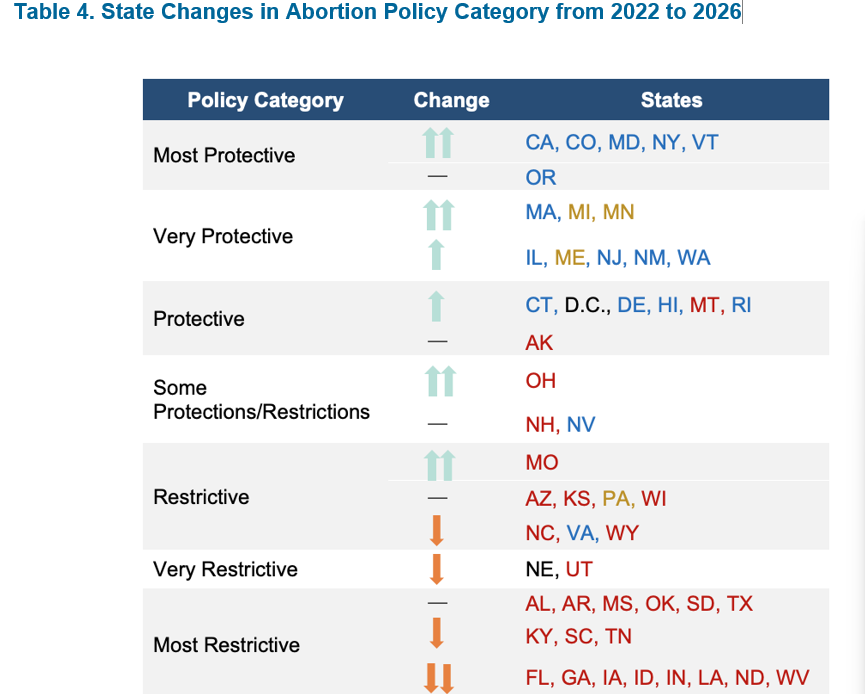
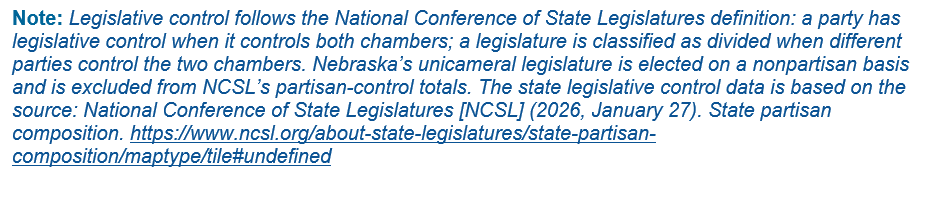
Following the Supreme Court’s decision in Dobbs v. Jackson Women’s Health Organization, abortion regulation shifted to the states, increasing the importance of state legislative control in shaping reproductive policy. As shown in Table 4, state legislative party control is closely associated with whether states adopt restrictive or protective reproductive policies. Among the 28 states with Republican-leaning legislatures, 24 adopted restrictive reproductive rights policies. In contrast, among the 14 states with Democratic-leaning legislatures, 11 adopted protective or the most protective policies.
The analysis further shows that legislative party control is strongly associated with changes in reproductive policy, although it is not the only factor influencing state-level outcomes. States such as Florida, Georgia, Iowa, Idaho, Indiana, Louisiana, North Dakota, and West Virginia experienced the largest shifts toward restriction, moving two categories into the “most restrictive” tier. In contrast, California, Colorado, Maryland, New York, and Vermont moved two categories toward becoming “most protective.”
However, party control does not fully explain all policy outcomes. For example, Michigan maintains a “very protective” reproductive rights policy environment and Minnesota a “most protective” policy environment despite divided legislatures, while Montana has maintained protective abortion policies under a Republican-leaning legislature. Conversely, Virginia has moved toward more restrictive policies despite Democratic-leaning legislative control. Overall, legislative party control remains an important factor associated with whether states expand or restrict reproductive rights.
POLICY RECOMMENDATIONS
Given persistent disparities in reproductive healthcare access across states in the post-Roe era, a coordinated national, state, and local policy response is needed to expand access and advance reproductive equity in the United States. The following recommendations focus on expanding access to family planning and preventive care, strengthening the reproductive healthcare workforce, increasing financial and logistical support for abortion care, integrating mental health services, and advancing durable protections for reproductive rights. By investing in healthcare infrastructure, improving preconception and preventive care, and establishing long-term policy protections, the United States can reduce geographic and socioeconomic barriers to reproductive healthcare. Together, these interventions can help close access gaps, improve maternal health outcomes, and support reproductive autonomy, particularly for low-income individuals and communities facing persistent barriers to care.
State-level protections for reproductive rights now play a greater role in preserving access to care. However, substantial differences in state policies have created uneven access to reproductive healthcare across the country. As a result, individuals' ability to obtain reproductive healthcare increasingly depends on where they live.
To reduce widespread disparities, policymakers should consider establishing baseline protections for reproductive healthcare access that provide greater consistency across states while remaining consistent with constitutional and legal requirements. At the same time, states can continue to strengthen legal protections for reproductive healthcare through legislation, constitutional amendments, and policies that safeguard access to reproductive services.
Following Montana’s example, states should establish a constitutional standard to safeguard access to abortion care prior to fetal viability. Such a standard could provide constitutional protection for abortion care, recognize abortion as health care, and support the inclusion of abortion procedures and services in public and private health care coverage on the same basis as other medical services.
Many people seeking abortion services face financial barriers, such as travel costs, unpaid time off, and child care responsibilities, particularly those living in states with restrictive reproductive rights policies. Expanding abortion funds and support services, such as funding for transportation, lodging, child care, and wage replacement, can help reduce these barriers and improve access for individuals facing financial hardship.
- Federal, state, and local investments should strengthen reproductive healthcare infrastructure by supporting provider recruitment, workforce retention, clinic expansion, extended operating hours, and clinician mental health services. States experiencing increased demand for reproductive healthcare, such as Virginia, demonstrate the need for targeted investments to sustain provider capacity and maintain quality care.
- In addition, directing grants and workforce development resources to maternity care deserts is essential, as 34.6% of U.S. counties are currently classified as maternity-care deserts. Strengthening healthcare infrastructure is critical to supporting both reproductive choice and maternal health.
Reframe reproductive health as whole person health care that extends beyond pregnancy and includes access to preventive care, family planning services, and reproductive health education. Improving access to preconception and preventive healthcare can help address persistent disparities in maternal health outcomes, particularly among historically underserved populations.
- Federal and state policymakers should reduce financial barriers to contraception by expanding affordability protections, insurance coverage requirements, and access to FDA-approved contraceptive methods. Reducing the cost of family planning services can help individuals make informed reproductive decisions and improve health and economic outcomes, particularly for low-income populations.
- Maintaining and expanding support for community-based reproductive healthcare providers, including nonprofit organizations, can help ensure access to essential services such as contraception, STI testing, cancer screenings, and preventive care. Leveraging existing community healthcare networks may help reduce disparities in access while improving long-term maternal and reproductive health outcomes.
CONCLUSIONS
Four years after the reversal of Roe v. Wade, reproductive rights in the United States have become increasingly fragmented, with restrictive state policy environments associated with substantial health, economic, and geographic inequities, particularly among women of color, low-income populations, and rural communities. Restrictive policies have increased barriers to abortion care, while evidence on some downstream health effects, including post-Dobbs pregnancy-associated mortality, remains developing. While states with protective reproductive policies provide important models for maintaining access to care, they also face growing challenges associated with increased patient demand and limited healthcare resources. The analysis further demonstrates that state political leadership remains a key factor associated with reproductive policy choice.
Addressing these challenges will require coordinated federal, state, and local action to strengthen provider and clinic capacity, reduce financial and geographic barriers to care, expand mental health and supportive services, address systemic inequities in access to healthcare, and establish durable protections for reproductive rights. Together, these efforts can help advance reproductive equity and create a more stable and accessible reproductive healthcare system nationwide.